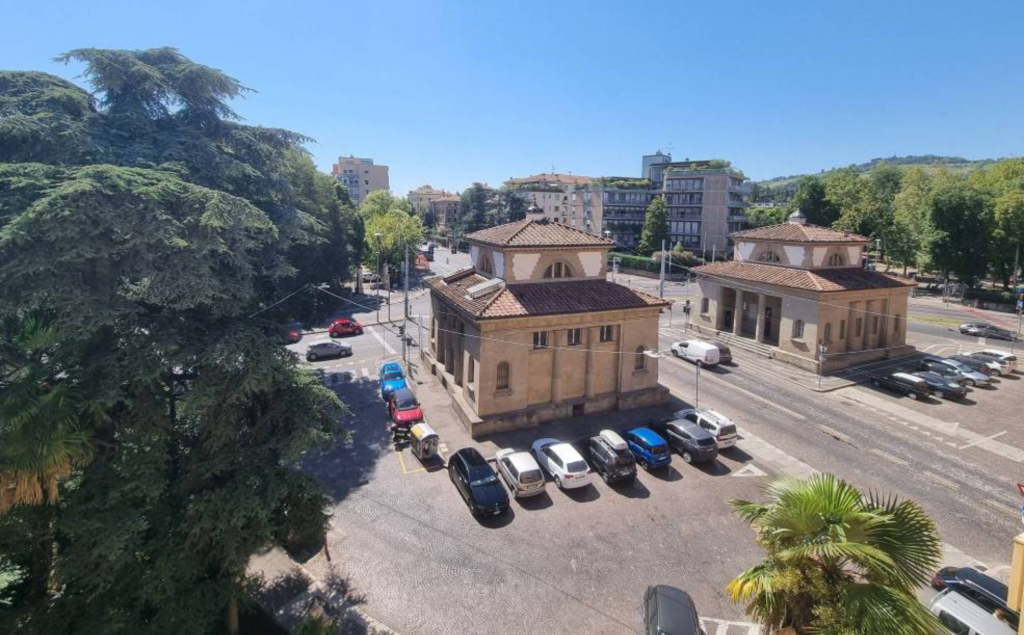
Porta Santo Stefano is one of Bologna’s historic city gates, located in the eastern part of the city. Characterized by its elegant architecture and strategic position, this gate played a key role in Bologna’s transportation and defense for centuries. Today, it stands as a symbol of the city’s medieval past, seamlessly blending into the modern urban landscape.
History
Porta Santo Stefano was built in the 13th century as part of Bologna’s second city wall, designed to protect the city and regulate commercial traffic. The gate provided access for travelers coming from the Bolognese hills and Florence, serving as an important hub for trade and travelers.
Over the centuries, the gate underwent various architectural modifications, particularly in the 16th century, when structural improvements were made to adapt it to new defensive needs. With the rise of firearms and changes in military strategies, its defensive function became less relevant, and the structure began to be used mainly for administrative and traffic control purposes.
During the 19th century, as Bologna expanded and many of its city walls were demolished, numerous city gates were either removed or altered. However, Porta Santo Stefano was preserved, maintaining its historical and architectural significance. Today, it remains a visible testament to medieval Bologna and its evolution over time.
Architecture
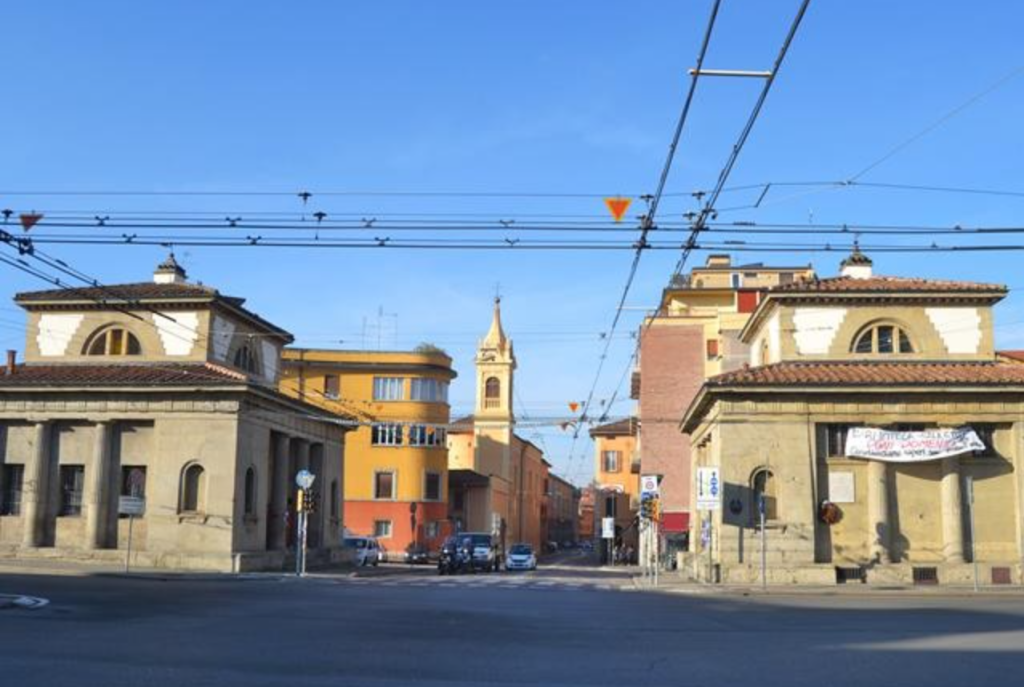
Porta Santo Stefano is distinguished by its harmonious design and imposing brick structure. The entrance arch, once equipped with a drawbridge and defensive features, is framed by lateral towers, giving the gate a majestic appearance.
Decorative elements and architectural details reveal different phases of restoration and adaptation over the centuries. Though no longer used for defensive purposes, the structure retains its grandeur and historical charm.
Porta Santo Stefano and Modern Traffic
Today, Porta Santo Stefano remains a key point for city traffic. Its strategic location makes it an important connection between Bologna’s historic center and residential areas. Despite being surrounded by busy roads, the gate maintains its historical appeal and continues to attract residents and tourists alike.
The surrounding area is rich in shops, cafés, and cultural spaces, preserving the historical tradition of the neighborhood. Restoration and conservation efforts have ensured the gate’s preservation, integrating it into the urban context while maintaining its historical value.
Curiosities
- Porta Santo Stefano once had a drawbridge, used to control access to the city.
- The gate is located along the ancient route connecting Bologna to Florence, making it a crucial passageway for merchants and travelers.
- During the 19th century, many of Bologna’s city walls were demolished, but Porta Santo Stefano was preserved due to its historical significance.
Conclusion
Porta Santo Stefano is one of Bologna’s best-preserved city gates and remains a fundamental part of the city’s historical heritage. From medieval times to the present day, it has maintained its role as an urban landmark and a symbol of Bologna’s identity. Visiting this gate offers a journey into Bologna’s history, allowing one to admire a masterpiece of architecture and historical memory that continues to thrive in the modern era.